How to Spot Quality at a Pizza Restaurant
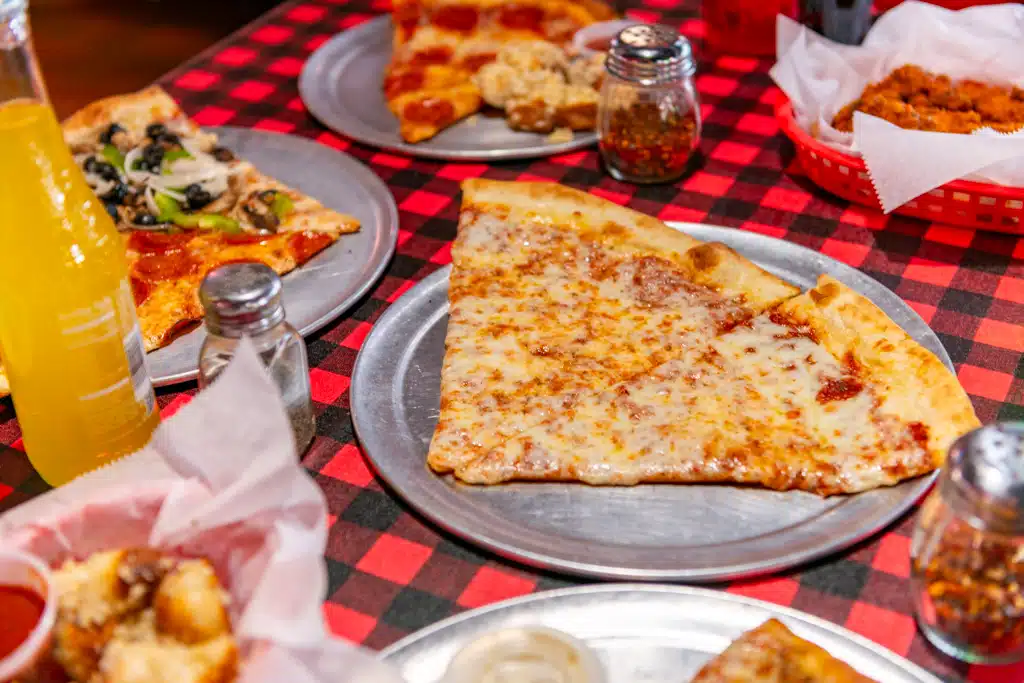
A good pizza can hide a lot. Melted cheese covers flaws. Garlic and oregano can distract from stale dough. A hot pie pulled from the oven has enough charm to win people over before they have asked the right questions.
That is why judging a pizza restaurant takes more than deciding whether you liked the first slice. Quality leaves clues long before the pizza reaches the table, and long after the meal is over. You can see it in the dough, hear it in the dining room, smell it at the door, and notice it in the way the staff handles a busy rush. The best places rarely get everything perfect every single night, but they do reveal a standard. That standard is what separates a restaurant worth revisiting from one that survives on convenience, novelty, or late-night hunger.
If you know what to look for, quality becomes much easier to recognize.
The first signs appear before you order
The strongest pizza restaurant often tells on itself within the first few minutes. Not through polished branding or trendy wallpaper, but through smaller signals. The room should feel cared for. Floors do not need to shine like a hotel lobby, yet they should be clean in the corners, not just down the middle where everyone walks. Menus should be current and readable. Tables should be wiped properly rather than smeared with a damp rag that leaves a sour smell behind.
Then there is the aroma. A serious pizza restaurant smells like fermented dough, tomato, cheese, heat, maybe char from the oven. It should not smell heavily of fryer oil unless fried items are a major part of the concept. It definitely should not smell musty, chemical-heavy, or oddly sweet in a way that suggests scented cleaner is covering another problem.
Open kitchens are useful, but not required. Even in a closed kitchen, you can usually tell whether the place is organized. Orders move with a rhythm. Staff members communicate clearly. The host does not look abandoned. Someone is paying attention to the room.
I have eaten at tiny neighborhood shops where the paint was worn and the chairs did not match, yet the operation ran with calm https://holdentind967.inkharbory.com/posts/how-a-pizza-restaurant-handles-catering-with-ease precision. I have also seen glossy new dining rooms where the front counter descended into panic over three takeout tickets. Fancy design can be expensive. Competence is harder to fake.
Start with the dough, because everything rests on it
At a pizza restaurant, dough is the clearest test of craft. Sauce can be bought. Cheese can be upgraded. Toppings can be marketed into seeming special. Dough has nowhere to hide.
A quality crust usually shows signs of fermentation. That means it has flavor beyond bland flour. You may taste a mild tang, toasted wheat, a touch of sweetness from proper browning, or a clean savory depth. Texture matters just as much. The crust should suit the style the restaurant claims to serve. A New York-style slice should fold without collapsing into wetness. A Neapolitan-style pizza should have an airy rim with tenderness inside the char. A tavern-style crust should snap where it is meant to snap.
One of the most common signs of mediocre pizza is uniformity in the wrong places. If every crust emerges pale, dense, and flavorless, the dough was likely rushed, under-fermented, or handled without much care. If every pie has a dry, cracker-like rim regardless of style, the dough may have been overworked, old, or poorly stored.
A well-made crust also reveals itself in the cornicione, the outer edge. People often treat that border as disposable, but experienced pizza makers know it tells the real story. If the edge is worth eating on its own, the restaurant probably takes the fundamentals seriously. If diners leave behind a ring of tough, bland crust on every plate, that is not just a personal preference issue. It is often evidence that the dough is failing.
There is an edge case worth mentioning. Some excellent slice shops produce a more restrained crust because they prioritize speed, consistency, and reheating quality. That does not automatically mean the dough is low-grade. The question is whether the crust tastes intentional or merely neglected.
The oven leaves fingerprints
You do not need to know oven temperatures to judge the result. You just need to look closely.
A quality pizza restaurant understands its oven and works with it rather than against it. In a wood-fired oven, some spotting and char are expected. Those dark blisters should add bitterness in small, pleasant doses, not coat the bottom with soot. In a deck oven, the bottom should brown evenly and hold structure. In a conveyor setup, which many people dismiss too quickly, the benchmark is consistency. Even a conveyor can produce respectable pizza if the dough, topping balance, and bake settings are dialed in.
What you want to avoid is confusion on the pie itself. A top that looks overcooked while the bottom stays pale. Cheese scorched into orange grease while the center remains underbaked. Thick bands of raw dough near the rim. Pools of water from vegetables that were not managed properly. These are not matters of style. They are execution problems.
One useful habit is to look at the underside of a slice. A good bottom tells you the pizza was baked with purpose. It should show color and structure. If it is blond and limp, the pie likely needed more time or a drier dough. If it is blackened while the rest of the slice tastes rushed, the kitchen may be using high heat as a shortcut rather than as a tool.
Sauce and cheese should support, not smother
Many diners focus on toppings because they are visible, but sauce and cheese determine whether the whole pizza eats cleanly. They also reveal whether a restaurant understands restraint.
A proper sauce tastes like tomatoes first. It might be bright and uncooked, slow-simmered and savory, lightly sweet, garlicky, or herbal depending on the regional style. What it should not be is sugary enough to resemble pasta sauce from a jar, or so aggressively seasoned that the tomato disappears. Good pizza sauce does not need to be loud. It needs to be balanced.
Cheese is another place where quality shows quickly. Better mozzarella melts into the pie. It stretches, blisters, browns in places, and carries dairy flavor instead of just fat and salt. Poor cheese often breaks into grease, forms a rubber cap on top, or leaves a chalky residue once it cools.
There is also the matter of proportion. Many weak pizza restaurants use extra cheese as a selling point because abundance is easy to market. But too much cheese can bury the sauce, steam the crust, and turn every slice into a heavy blanket of dairy. The same goes for sauce. Too much creates slippage and sogginess. Quality often looks less dramatic than quantity.
I once watched a cook remake a pie because one side had taken a slightly heavier ladle of sauce than the other. That may sound fussy, but the finished pizza ate exactly as it should. Each bite carried crust, tomato, cheese, and topping in balance. That sort of attention is rarely accidental.
Toppings reveal the kitchen's priorities
Toppings are where many restaurants either impress you or expose themselves. The question is not whether they offer exotic ingredients. The question is whether they handle ordinary ingredients well.
Pepperoni is a perfect test. On a good pie, it cups or lies flat depending on type, renders some fat, crisps at the edges, and contributes spice without flooding the surface. On a bad one, it sweats grease, tastes plasticky, or sits undercooked on top of the cheese. Mushrooms should taste earthy and meaty, not leak so much water that the slice goes limp. Sausage should be seasoned and properly browned, not gray and crumbly. Basil should be fresh, not blackened into confetti.
The same principle applies to premium toppings. Prosciutto, burrata, hot honey, anchovies, nduja, roasted garlic, artichokes, soppressata, all of them can be excellent. None of them rescue poor fundamentals. If a restaurant leans hard on luxury ingredients but cannot produce a stable crust or a clean bake, the menu is doing more work than the kitchen.
Seasonality matters too, though in pizza it appears in practical ways. Summer tomatoes on a special pie can be wonderful. So can winter mushrooms or spring greens. But quality is less about farm-to-table slogans and more about whether the topping makes sense on the pie, both in flavor and moisture management. A beautiful ingredient can ruin a pizza if it is piled on carelessly.
Service often mirrors the food
Restaurants tend to repeat themselves across departments. A place that handles dough thoughtfully often trains staff thoughtfully too. Not always, but often enough that it is worth paying attention.
At a quality pizza restaurant, the service feels informed. Staff members know the difference between styles, can explain which pies run spicy, which salads actually pair well with the food, and whether a pizza will arrive softly centered or firmly crisp. If you ask a simple question about ingredients, the answer should sound confident rather than improvised.
Speed is another clue, though it must be judged fairly. A wood-fired pizza may arrive quickly once the order is placed. A heavily loaded deep-dish pie may take much longer. What matters is whether the timing matches the explanation. Good restaurants set expectations. Poor ones leave guests wondering if the kitchen forgot them.
Problems are especially revealing. Every restaurant makes mistakes. Orders get crossed, dough tears, ovens misbehave, a cook salts something too aggressively. What distinguishes quality is how the staff responds. Calm correction, honest communication, and a prompt fix tell you the standards are real. Defensiveness, blame, or indifference tell you something else.
A short checklist for the table
If you want a practical way to assess a pizza restaurant during a single visit, these five checks cover most of what matters:
- Look at the crust edge and underside before the first bite.
- Notice whether the slice holds its shape or collapses immediately.
- Taste the sauce separately if you can, even a small smear on the plate tells you a lot.
- Pay attention to grease and water on the surface, excess of either usually points to balance issues.
- Watch whether the staff seems composed during busy moments.
These are not fine-dining criteria. They are working signs of a kitchen that knows what it is doing.
Consistency is harder than brilliance
Many places can turn out one memorable pizza on a good night. The stronger test is consistency over time, across different orders, and under pressure.
A dependable pizza restaurant makes a plain cheese pie with the same care as a specialty pizza. That sounds obvious, but it is not universal. Some kitchens lavish attention on their signature combinations and treat the basics as an afterthought. That is backward. A plain pie is the purest audit of quality. No truffle cream, no burrata reveal, no mountain of arugula. Just dough, sauce, cheese, heat.
Takeout is another revealing format. Pizza changes in the box. Steam softens crust, cheese settles, toppings shift. A well-run restaurant anticipates this. They may under-sauce slightly for carryout, vent boxes properly, or cut certain styles in ways that preserve structure. If a pizza is excellent only when eaten at the counter within ninety seconds, that does not make the restaurant bad, but it does narrow the claim of overall quality.
Lunch can differ from dinner too. Some slice-focused shops shine during the day, when turnover is high and reheating is crisp. Some full-service places are at their best on weeknights before the rush crushes timing. Quality includes understanding these variables rather than pretending they do not exist.
Price matters, but value matters more
An expensive pizza is not automatically a quality pizza restaurant, and a cheap one is not automatically cutting corners. Still, pricing can tell you how a place sees itself.
If the menu price is unusually low for the neighborhood, ask what is being sacrificed. It may be labor, ingredient quality, portion consistency, or simply profit margin in a model built around volume. If the price is unusually high, ask what you are receiving in return. Better flour, longer fermentation, stronger toppings, trained staff, a distinct style, a comfortable room, all of these can justify a premium. Branding alone cannot.
Value comes from alignment. A ten-dollar slice shop pie can be terrific value if it is satisfying, well made, and reliable. A thirty-dollar artisan pie can also be good value if it reflects serious skill and ingredients. Trouble begins when the experience and the price tell different stories.
I have paid very little for pizzas that tasted honest, skillful, and complete. I have also paid a lot for pies that looked photogenic but ate like marketing. The most disappointing restaurants are rarely the cheapest. They are the ones that charge for aspiration and deliver indifference.
Cleanliness should extend beyond what customers see
Most people notice the restroom and the dining room, and they should. Both matter. But quality-minded operators usually reveal themselves in subtler forms of order.
The shakers on the table are filled and unclogged. Plates arrive without old residue at the base. Water glasses do not smell like sanitizer. Parmesan is stored properly and tastes fresh. To-go boxes are assembled neatly, not crushed and greasy before they reach the counter. These are minor details until you add them together. Then they become a pattern.
The same pattern often extends to the pizza station. In an open kitchen, look for flour management. Too little flour can create sticking and torn dough. Too much burns on the oven floor and leaves bitterness on the crust. Look at topping bins. Are they fresh and replenished, or dried at the edges from sitting too long? Is the peel work clean and confident, or awkward and rushed?
None of this requires perfection. A Saturday night rush can make any kitchen look rough around the edges. What you want is evidence of control rather than drift.
Reputation helps, but your own senses matter more
Crowds can indicate quality, but crowds can also indicate location, delivery reach, social media traction, or a strong bar program. Reviews are useful, but they often over-reward novelty and under-describe fundamentals. Even recommendations from friends need context. Some people value a crisp crust above all else. Others care most about topping generosity, or whether the pizza pairs well with beer during a game.
That is why your own evaluation matters. Over time, you start to build a mental file. You recognize the difference between char and burn, between richness and heaviness, between abundance and excess. You notice which restaurants taste just as good on your third visit as they did on your first.
A great pizza restaurant does not need to perform quality. It expresses quality through repetition, discipline, and choices that hold up under scrutiny. The room feels cared for. The dough tastes alive. The bake is intentional. The toppings make sense. The staff knows the product. The plain cheese pie is worth ordering. Those are old-fashioned standards, but they remain reliable.
When you find a place that gets these things right, you know it quickly. Not because it announces itself, but because every part of the meal feels settled, practiced, and true. That is what quality looks like in a pizza restaurant, and once you learn to spot it, average pizza becomes much easier to leave behind.